home
>
SF
>
cons
>
2Kon: Eastercon 2000
![[Programme Book]](e2000.jpg "[Programme Book]")
The 51st British Easter Science Fiction Convention
21--24 April 2000, Central Hotel, Glasgow
GoHs:
Guy Gavriel Kay
, Katherine
Kurtz, Deborah Turner Harris, John Salthouse.
The programme listing was again rather sparse, but again, the
quality
was high: mostly new items, hardly any items I had seen before, and
well-run panels.
![[Big Issue?]](pikachu.jpg "[Big Issue?]")
On the Friday, getting into an SFnal frame of
mind, and not yet being attuned to the Glasgow accent, I through I heard
someone in the street saying "Pikachu", when they were in fact
selling ... the "Big Issue"!
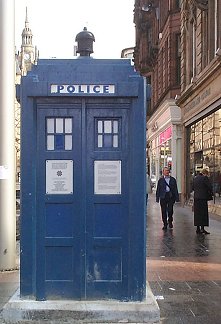
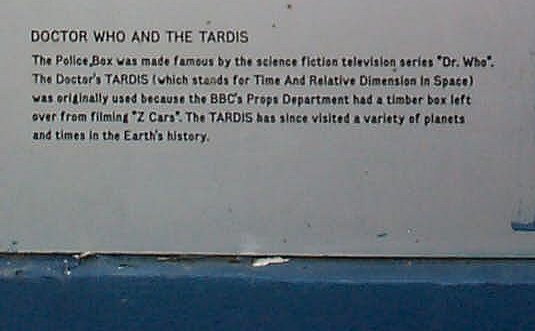
I've been to Glasgow (home of
blue
police boxes
that acknowledge
the
Tardis
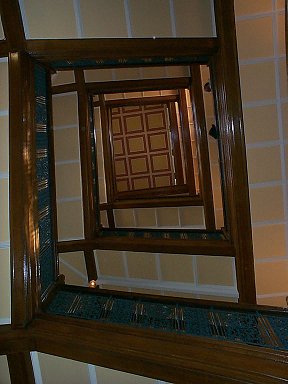
) and the Central Hotel
with
its marvellous staircase
before -- for the smaller Albacons in
'85
and
'91
, and for the
'95
Worldcon, where it was only one of the many
programme areas. It is probably straining the limits for an Eastercon: it
could have done with a third large programme room, and with more catering
(although it did have the breakfast queuing down to a fine art).
Overheard:
"I'm trying to pull Amazon
out of the red all by myself."
Programme highlights
Panel --
What Research? I Write Fiction!
Guy Gavriel Kay
, Scott MacMillan,
Mark Simmons
Have you ever been jolted out of a good story because of some niggling
bit of historical inaccuracy? This panel looks at the importance of doing
your research so you can diverge with purpose.
-
MS: archaeologists get phoned up and asked "what sort of nappy
did Egyptian children wear in Akhenaton's time?"
-
GGK: you need to be grounded in credibility, of character, science,
setting, magic -- but research can be a seductive trap
-
you can confuse the research with the novel -- "undigested
research"
-
having facts and details does not make the reader happier
-
you need unobtrusive fats that work their way in to the narrative
without impeding the flow -- for example, Tom Wolfe's journalistic
writing like
The Right Stuff
is great, but his novels are
constantly arrested by lumps of research.
-
SM: I'm a State Herald of Ireland, but I've never written about
Heraldry, because it would be boring, for me.
-
My background is TV, which need to be visual, can't be held for
too long with explanations.
-
For an episode of
Outer Limits
, I wanted a character to
fire a pistol underwater. Can it be done? I took a gun into a
swimming pool. The first bullet hit the side and damaged it -- the
second I fired the length, and it went about 15ft.
-
Of Noel Coward: "How was your flight Mr Coward?" "Have
you ever been on an aeroplane?" "Yes." "Did you
go anywhere?" "Yes. "Well, it was rather like that!"
-
GGK: There are libraries and academics to consult for straightforward
historical research, but how do you research the relationship between
Elves and Dwarfs?
-
Tolkien
researched by
inventing. It's important that there's more material background than
what appears in the book, to instill reader confidence that "this
narrator knows what they are talking about"
-
I don't need to tell you
everything
about how people
travelled in antiquity. I need to tell you
enough
to give
you that "I can be trusted" feeling
-
SM: And you can't write enough background to be convincing without
some
research.
-
My wife, Katherine Kurtz, has written a book based in Dublin --
even though we've lived in Ireland for 15 years she spent 3 weeks
walking around Dublin.
-
I can drive, but I couldn't write credibly about driving to
Istambul, or driving a Formula One racing car.
-
GGK: but you don't have to learn by doing, you can learn by reading
-
SM: Read
Das Boot
to know
everything
about running a
WWII U-boat. A great plot can be readable even if the characters are
poor, but if the characters are good yet there is not plot ... well,
just look at the winners of literary prizes, then try to
read
those books!
-
GGK: the research can bring characters to life. For example, my
learning about mosaic art in antiquity influenced the way a character
developed -- fingers are always cut, from handling broken glass -- there
was conflict between different techniques, which gave a chance for a
plausible argument.
-
GGK: The Internet has changed my research -- not for the details, but
for finding the
people
I can ask
-
MS: We did some research for
Time Team
on Mediaeval
Christmases -- the food, plants, songs... Then in a briefing the
producer says, "well, we've got this boar's head, and we've put up
some holly, even though they didn't used to..." Sometimes I wonder
why we bother.
-
SM: I was the technical advisor on US mounted cavalry for the TV
mini-series
Centennial
. I drilled 30 guys on how to ride and
dismount properly. But the director said it was wrong, because that's
not how John Wayne does it! The scene was edited out of the programme.
-
MS:
The Mummy
is marketed in US schools as "authentic"!
It's a curious mixture: there is perfect text written on the jars, but
the wrong number of jars.
-
GGK: There is a point of diminishing returns. A production of
Pride
and Prejudice
, in a prestigious Toronto theatre, discovered what
women wore at that period, but deliberately didn't use it, because they
wanted to make an historical piece that pleased the audience. But they
were apologetic about it -- which a TV programme never would be.
-
SM: they should have researched
actor's
costumes of the time
-- that would have been more appropriate.
-
MS: to check the authenticity of the costumes -- look at the feet. I
saw 300 Frenchmen in armour, all wearing Doc Martens!
-
SM: Shoe makers often make shoes too small, because they just have an
order for 300 pairs, and they can cut back on the materials used and
make more profit -- and then the actors end up wearing Doc Martens.
-
SM: In
Braveheart
, the decision was "the Scottish guys
gotta be in those dress things, else no-one will know they're Scots".
Kilts were not worn at the time, the armies would have looked identical
-- which would have been just too confusing for any audience.
-
GGK: sometimes modern sensibilities would be too distracted by
historical accuracy -- like the missing or black teeth in beautiful
women. It's a trap to show the real dirt and grit, because the
characters themselves would have noticed nothing unusual.
-
SM: movies capitalise on the viewers' inbuilt visual images, and use
these for shortcuts or deliberate shocks.
-
SM: Sometimes you just
have
to make stuff up. If you want
some difficult research: try researching the RUC -- the only police
force in the world with an unlisted phone number, and whose PR office
won't talk to you.
-
MS: In a combat scene, you can't use a real sword, even though weight
and balance are important, because of the dangers. And if you had an
accurate portrayal of a mediaeval battle, the audience would walk out
after three minutes, sickened by the bloodshed.
-
MS: When we see something inaccurate, we are angry because our
suspension of disbelief is ruined. Everyone raves about
The
Engines of God
, but it has bad archaeology: when they are
trying to rescue the machine that has important writing on it, why don't
they just photograph it?! Different things throw different people.
Related material from previous cons:
TechnoBabble
panel game
Can the panellists tell the difference between science fiction,
science, and b******s?
a rerun of the
Reconvene
game, with some new
questions.
-
"Danger, Kim Stanley. Danger!"
-
"My [Bugs] scripts got rejected on the grounds that it was too
far-fetched."
-
"It's a quote from the longest running SF TV show." "What,
Sky at Night?"
see also:
rasfw
technobabble thread
![[Gary Stratmann]](../../external/sf/1986.jpg "[Gary Stratmann]") Martial
Arts in SF
Martial
Arts in SF
Gary Stratmann and Linda Stratmann
-
Putting an actor in a mask is useful -- the audience can't tell them
from the stuntman
-
The Phantom Menace
light sabre duel took a lot of training, and looks spectacular. It's
kung fu style stickwork. It was better than the earlier films, because
the light sabres didn't shatter during the fight, and were heavy enough
that the actors could really lay in with them.
-
Xena
/
Hercules
-- most of the crew are kung fu experts
-- they are very good at what they do, very good at making the stars
look good, and they can die well. They
can
run three steps up a
wall -- then fall off, because gravity cheats! We can expect to see our
heroes running up walls for years to come.
-
"kung fu" just means "very good, master".
-
Most SF uses is Chinese fighting plus Japanese mythology ("not
as clumsy as a blaster" -- especially one in the hands of an
Imperial Stormtrooper!) because it looks alien to USans.
-
The Klingon bat'leth is definitely designed for people who drink a
lot then go out for a fight. It's quarterstaff style.
-
Real martial arts is very quick. It has to be slowed down for the
screen (except for the sword duel at the beginning of
The Seven
Samurai
[Akira Kurosawa, 1954], and
Captain Kronos: Vampire
Hunter
[Hammer, 1974] has a sword duel lasting about a second).
-
Screen fighting attacks the weapon, not the person -- lots of
twiddling around.
-
In
Babylon 5
-
The Minbari/Ranger fighting pole is just a staff
-
The Centauri use a Roman short sword as a duelling weapon -- but
the Romans used shields!
-
No amount of spiritual teaching will save you if the other guy shoots
you from 500 paces.
-
Dr Who
has Venusian
karate -- Jon Pertwee was taught aikido by the stuntmen, but he had a
bad back in reality. Real martial arts involves a lot of being dumped on
your ass, being hit, being kicked -- often all at once.
-
It's cheaper to use martial arts, because there are no blaster FX, no
burnt clothing. But
Hawk the Slayer
[1980] managed to have no
fake blood at all!
-
The Matrix
-- starts
as kung fu and ends as Hollywood. Trained the actors for three months to
fight.
-
Very few alien martial arts are embedded in the culture. If you are
continually fighting wars, new tech replaces old. So in the West, few
martial arts survive -- no-one is sure how people
really
fought
with quarterstaffs (though there are a limited number of ways to hit
someone with a stick). In the East, they had more time on their hands to
develop the arts -- and were not allowed the high tech swords.
-
The policeman's truncheon -- not a very good weapon, but it has some
tradition. Now being replaced by a sidearm baton, itself derived from a
Japanese weapon derived from a pipe.
-
Epee fencing is closer to a practical fighting technique -- can hit
opponent anywhere. Foil fencing has a much more limited target.
-
Military swords and bayonets survive, because you can always run out
of ammunition.
-
A tradition of duelling usually becomes a tradition of non-lethal
fighting, otherwise you run out of officers, or whoever, very quickly.
-
Buffy the Vampire Slayer
-- uses kick boxing -- Sarah Michelle Gellar had done it before -- it
looks very good on film, because it's slower than punching -- it's
easier to choreograph fights.
-
Anime makes guns a martial arts -- especially
two pistols
.
-
All the posing is actually waiting for the other guy to do something
-- like blink.
-
The fencing scene in
The Princess Bride
is tremendous fun --
traditional swashbuckling spoof style, done extremely well -- but it's
not realistic fighting.
The Mask of Zorro
is extremely good "Hollywood
sword fighting". The Oliver Reed version of
The Three
Musketeers
has a lot of hitting people with furniture -- making use
of what's available.
-
The police use horses as weapons, to control crowds. (But horse don't
do well on marbles.)
-
Jackie Chan is an extremely good acrobat. He doesn't fight, rather "plays"
with his opponents -- such as grabbing the hand of one, then hitting
another with it.
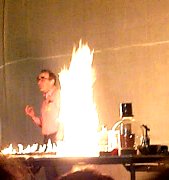
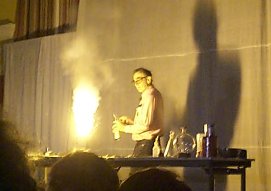
John Salthouse --
Son et Lumière
"exothermic chemistry" demonstrations ... or, "Things
that go bang. Loudly"
This is such a popular event that, due to the limited size of the main
programme room, it needed two sittings!
Liquid oxygen is such a dangerous chemical
they won't supply it to pyromaniacs like me. So I have to make my own.
As previously seen at
Albacon '91
Panel --
The Arthur C Clarke Awards
A panel of past judges discuss this year's shortlist, and decide their
choice of winner.
-
The shortlist for Best Novel is:
-
First -- how can we ditch some? By weight? Let's just read the light
ones!
-
Neal Stephenson
-
Let's get rid of
Cryptonomicon
, because it's not SF
-
But Clute has it as one of his top five SF of the millennium!
-
The best bits are the WWII bits -- which
aren't
SF
-
And being set in the future does not make a book SF
-
Let's move on to something else and come back to
Cryptonomicon
later
-
Gernsback said SF should be 5% science and 95% romance
-
Stephen Baxter
-
Trilogies:
-
The rumours why
Red Mars
didn't win was because it
was the first in a trilogy, so you couldn't tell yet if it was
any good (and the other two parts were rejected because they
were also parts of a trilogy)
-
And
Time: Manifold 1
is also the first of a trilogy
-
The Sparrow
won -- yet it has a sequel -- but it
does stand alone, whereas
Red Mars
does not
-
Stephen Baxter one day has to let his characters stay dead -- he
has a real resurrection complex.
-
We are agreed --
Time
has gone
-
Vernor Vinge
-
Let's get rid of the Vinge.
-
It wasn't as bad as I was expecting
-
A Fire Upon the Deep
was great -- this one is stretched
too thinly.
-
I could hear John Wayne lecturing as in
True Grit
.
-
I'm astounded it was nominated for the Prometheus Libertarian
Award -- despite the fact it's the best argument for Worldwide
Military Government since Heinlein's
Starship Troopers
!
-
The Vinge is gone.
-
Bruce Sterling
-
I'll put the boot into
Distraction
then. It's like one of
those 1960s narrative history books, with little boxed asides about
the characters. Three pages of not very good info dumping at a time.
Off scene events.
-
He's got some good ideas, great dialogue, but he doesn't know
what he's trying to say, there's no plot. Everything is set up to be
inevitable, rather than plausible.
-
It made me laugh out loud in places, but at the end I hurled it
lightly against the wall. The satire on American society was
brilliant, but I got tired of it after a while.
-
With a lot of this shortlist, I get deja vu.
Distraction
made me think of Stephen Bury's
Interface
-- but that other
was a lot sharper.
-
The Governor of Louisiana character was a bit unsubtle -- it was
just Huey Long dropped in.
-
It didn't finish in a satisfactory way, no proper closure.
Sterling is much better at the short story or novella length. The
beginning as a novella would have been much better.
-
So the Sterling is out.
-
Kathleen Ann Goonan
-
Goonan can't write, can she? She writes a chase scene and makes
it sound dull and leaden.
-
I liked it. It had a plot, a beginning, middle and end. It's set
in Hawaii, which makes it fun. But it's too long.
-
It shows a misunderstanding of American political history...
-
... and of the effect of diet on growth
-
The ending is resolved by magic. He does some maths in his head,
then steps through a portal -- it's a magic spell! He should have
used the maths to build a portal, or find out where the portal was.
Very
Anne McCaffrey
.
-
My big problem is I remember nothing about it. I lost the thread
while reading it, and now it's all vanished. Not memorable enough
for the ACC award?
-
I enjoyed it, and it reminded me of
Connie Willis
-- focussed
rather more on the characters than the events -- curiously detached.
-
Of all the books this is the one with the best characters -- they
are real people.
-
It rested on strings of coincidences -- very little logic
structuring it. But because the characters worked, I was interested,
and didn't mind the coincidences.
-
It's not a winner
-
Justina Robson
-
I
loved
bits of
Silver Screen
. This is the only
one who can
write
.
-
It's very
British
-- unlike the other British author,
Stephen Baxter, who's trying to be an American writer. Actually,
it's very Leeds. Like those other British authors -- Jeff Noon,
Ken MacLeod
, Simon Ings --
they all have a sense of place, of culture. Parts reminded me of a
redeveloped Docklands -- very vivid images.
-
I really enjoyed it, but I don't think it's that great -- the
plot is so simple, I can't describe it without giving it away. It's
a who/whydunnit -- although at the end we know who but not why -- a
rereading might make the why clearer.
-
It makes me want to read her
next
book.
-
There are lots of really great parts, but the integration isn't
done all that well.
-
It doesn't have a "happy ever after" -- a character is
traumatised and
stays
traumatised.
-
The characters work really well -- you believe in them. The
bulemia is handled well -- the sufferer can
control
it but
it's not going away -- the character is only "in control",
not some laid-back perfect heroine.
-
I think it's flawed, but it is so great in places, and you want
to jump up and down and say "read this". Unlike all the
others. It's not overwritten -- just a single narrative with a
couple of flashbacks. I think it's a winner. The problems are with
integrating the pieces, not with the necessity of those pieces -- it
all belongs in there. Modern 400 page novels are often two 200 page
novels that the author seems to have dropped and shuffled the pages
together.
-
Neal Stephenson
-
Cryptonomicon
is
physically
difficult to read,
it's so heavy! And so complicated: I was having to keep notes!
-
I got really bored with it -- even though I was really looking
forward to it. I kept putting it down. I only got about half way
through, then I finished off by skipping the modern bits.
-
So you missed the five pages on how to eat cereal?
-
And the riff on the cultural study of beers was great!
-
I've just heard an academic paper on the iMac advert just
like that!
There are some good bits
-
Lots of these have a theme of cryptography -- and of alienated
children
-
I think
Cryptonomicon
will win, and it's the wrong winner. If
it wins, it will be a scandal -- but the ACC award is no stranger to
scandal!
-
The BSFA shortlist [
Eugene Byrne
ThigMOO
, Justina Robson
Silver Screen
,
Mary Doria Russell
Children
of God
, Simon Ings
Headlong
,
Ken MacLeod
The Sky Road
]
is much better than this one.
-
Silver Screen
is the best on this list. If you wave
Cryptonomicon
around as best SF (if you can wave it around!) people will look at you
strangely -- the best bits are the historical bits.
-
Let's vote:
Cryptonomicon
-- zero.
Silver Screen
--
all
-
How many of the audience have read either? [about 4 had read one,
another 4 the other]
-
Silver Screen
is good old fashioned SF with modern techy
things, chases, and a plot.
And
characters!
-
The ACC award panel is supposed to read each entry a second time
(after it is shortlisted) -- and base the award on second impressions.
(Sometimes on reading a book a second time, we wonder why we shortlisted
it.) Will anyone be
able
to read
Cryptonomicon
a second
time?
-
So, we've got a hypothetical winner -- but then we were wrong last
year! Whether it wins or not,
Silver Screen
is something we
would recommend.
[
Distraction
won the ACC award]
Katherine Kurtz --
GoH interview
-
Author website at
www.deryni.net
-
Codex due to be published soon -- the author saw my notebooks on the
characters
-
British publishers didn't push the series, so it went out of print.
Currently available only as US imports
-
I love writing stories involving the Templars. As an historian, that
Holy Blood and Holy Grail
stuff
really
annoys me.
-
I've fallen in love with Dublin. I had a lovely excuse for poking
around odd corners of the city -- I was doing research! It's a Gargoyle
story. The rot set in in Georgian times when they stopped putting
gargoyles on buildings.
-
How did you feel when Gwynedd became the name of a real county?
-
If I was doing it over, I probably wouldn't use a real
historical name. When I first visited Wales, after writing the first
book, it was lovely, but it didn't speak to me in an emotional way.
But when I crossed the border into Scotland, I felt I had come home.
-
"deryni" is from the same root word as "druid"
and "oak", from the Welsh. It's pronounced der-
rin
-ee,
but
deh
-rin-ee is an okay second pronunciation.
-
Part of the fun of writing a saga series, as an historian, is getting
intrigued by the historical flow. I personally am not intrigued by
prehistory, or the Continent, and prefer to stay in these Isles. My next
book about Joan of Arc meant I had to learn more French history than I
really wanted to know.
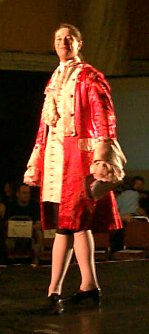
Masquerade
 Guy
Gavriel Kay
Guy
Gavriel Kay